Why Communities Keep a Welcome Ritual
A welcome ritual can turn a recurring task into shared culture. Learn how to shape one around the work, mark progress, and adapt it as the group changes.
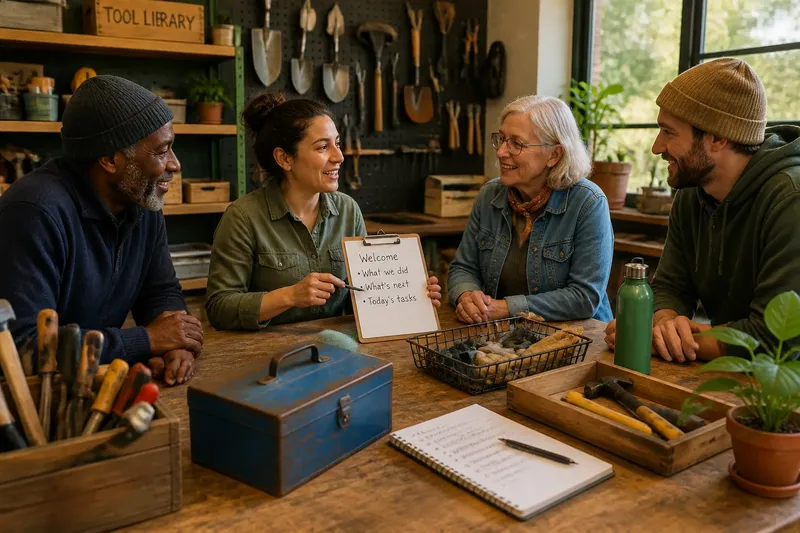
A welcome ritual can make a community’s shared work feel like a practice people shape together, not a task that starts and stops with whoever is leading. At a neighborhood tool library, a short opening might mark the shift from sorting returned tools to deciding what the collection needs next. The ritual’s value lies in connecting an ordinary action to the group’s purpose.
How does a welcome ritual shape shared work?
A ritual is a repeated action that carries shared meaning. It might be a phrase, a gesture, or a small sequence people recognize. In a community setting, that repetition can mark a transition: from planning to making, from tending to reflecting, or from one season of work to another.
For example, a community garden crew might open each work session by naming one task the previous group completed and one task still ahead. This does more than announce the plan. It links individual visits to continuing work and makes contribution visible across time.
Useful rituals usually connect three elements:
- Purpose: What shared activity is beginning?
- Continuity: What earlier effort or shared value does it acknowledge?
- Transition: What action follows the opening?
A ritual need not be solemn or elaborate. A familiar phrase while setting out materials, a brief round of naming what needs attention, or a shared pause before a meal can do the job when it fits the group’s actual work.
What makes a ritual meaningful rather than merely repetitive?
Repetition alone does not create meaning. A phrase can become background noise if it no longer connects to what people are doing. The strongest rituals are easy to understand and rooted in a specific shared activity, such as returning borrowed tools, preparing a meal, or closing a community workday.
Keep the action proportionate. If a recurring gathering already has a natural transition, a brief acknowledgment may be enough. A long ceremony built around a small task can make the ritual feel like another obligation rather than a useful marker.
It is not worth adding matching clothing, elaborate props, or a carefully staged sequence just to make a ritual look distinctive. Those details matter only if the group itself finds them meaningful and they support the activity.
How can a group design a ritual around its work?
Start with a recurring moment the group already experiences: opening a shared kitchen, beginning a repair session, or closing a neighborhood cleanup. Choose one action that marks that moment, then connect it to the task that follows. Keep the wording plain enough that people can adapt it without losing its purpose.
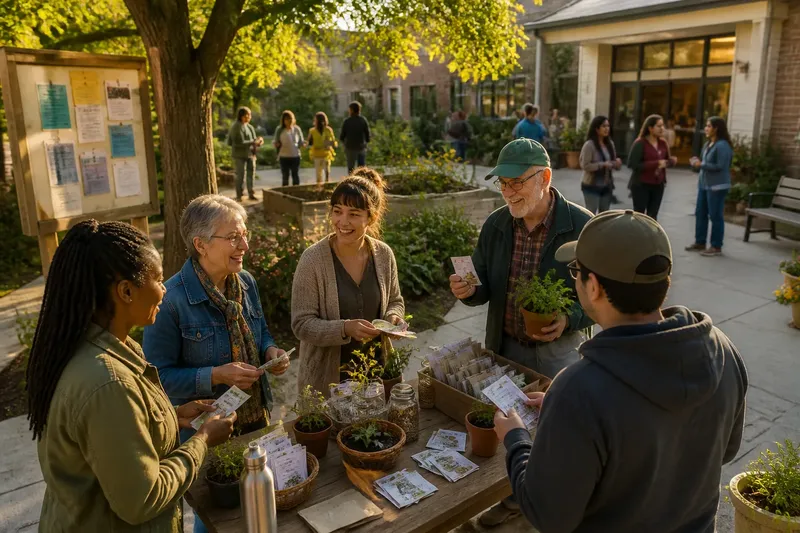
Say you help run a neighborhood seed exchange, and volunteers currently begin by unpacking boxes without knowing what has arrived or what needs sorting. You could place a seed catalog beside the boxes, invite one person to name a variety that needs attention, and then assign the first sorting task. The shared opening would link the materials to the day’s work; if the catalog is confusing, the group could instead begin by reading the box labels together and choose a task from what is actually on hand.
As a group drafts its own ritual, use these checks to decide what to keep or change:
- Purpose: If participants can name the shared task after the opening, keep the wording; if they cannot, state the task more plainly.
- Connection: If the ritual acknowledges a real shared value or earlier effort, retain that detail; if it feels unrelated, remove it or link it to the work.
- Duration: If the opening regularly delays the activity, shorten it; if people still need basic context afterward, add only the missing information.
- Participation: If the ritual requires one person to speak or perform, add another way to take part; if several people can contribute naturally, keep the format.
- Materials: If an object such as a sign or shared notebook clarifies the ritual, use it; if no one refers to it, remove it or replace it with a clearer cue.
- Repeatability: If different members can lead the ritual comfortably, share the wording and sequence; if it depends on one person, simplify it or divide the tasks.
How should a ritual change when the group changes?
Keep the purpose recognizable while allowing the details to change. A group that moves from an outdoor garden to a library planning table may no longer need the same opening action, but it can retain the practice of naming what the previous session accomplished and what comes next.
Explain changes in terms of the work. If a volunteer crew replaces a spoken round with notes on a shared board, say that the new format helps everyone see what is underway. A clear reason makes the adjustment legible instead of leaving people to guess whether an old custom has simply been forgotten.
Ask for feedback about observable effects. Did the ritual help people understand the task? Did it recognize contributions that might otherwise go unnoticed? If the answer is no, revise the part that is not serving the group rather than adding more ceremony.
What questions help a group shape its ritual?
Can a ritual be practical as well as symbolic?
Yes. A repeated action can carry meaning while also helping the work begin, such as reading the repair list before volunteers choose tasks. The practical action gives the ritual a reason to recur.
Should a ritual stay exactly the same?
No. Preserve the purpose, not every word or object. Adjust the form when the activity, location, or group needs change.
Who should lead the ritual?
Share responsibility when possible. If only one person can lead it, the ritual may depend too heavily on that person’s availability or preferred style.
How can a group tell when a ritual no longer fits?
Notice whether people understand its connection to the work and whether it helps the group move into action. If it feels detached or regularly gets skipped, simplify it or replace it with a more relevant shared practice.
How can a ritual recognize contributions?
A closing ritual can help a group see work that is easy to overlook. A community kitchen might end by naming which supplies need replenishing and who will pass that information to the next shift. The purpose is not to rank effort, but to leave a clear handoff and make shared responsibility visible.
Welcome rituals can also acknowledge maintenance: cleaning brushes, labeling donated items, or updating a shared schedule. When a group recognizes these tasks as part of its common work, its customs reflect how the community actually functions.
A welcome ritual earns its place when it connects people to a shared purpose and gives the work a clear beginning. Keep the action simple, let its meaning grow from what the group does, and revise it when it no longer serves that work. That is how a small repeated practice can become part of a community’s shared culture.