The First Visit to a Local Group, Without Pressure to Perform
A first visit to a local group feels easier when you know the format, choose one small aim, and decide in advance whether observing is enough.

A first visit to a local group is easier when you know what the gathering asks of newcomers before you arrive. Check the format, choose one modest expectation, and give yourself permission to watch before taking part; those choices help you find a comfortable way into the room without treating the visit as a test.
What kind of gathering suits your first visit?
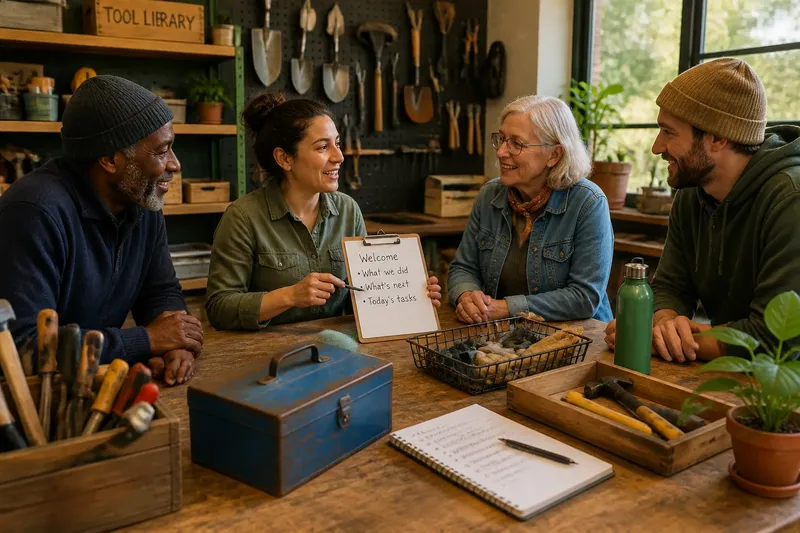
Start with the shape of the meeting rather than the group’s broad purpose. A neighborhood garden group, for instance, might spend its time working outdoors, sharing updates around a table, or planning future projects. Those formats call for different kinds of participation, even if the group has the same name.
If you prefer a clear activity, look for a gathering with a visible task, such as sorting donated books or preparing materials for a community event. A shared task gives your attention somewhere to go and can make brief conversation feel more natural. Ask whether newcomers can watch first or join a task when ready.
If conversation is the main activity, find out whether the group uses introductions, an agenda, or open discussion. A structured meeting may feel easier if you like knowing when to speak. A casual drop-in can suit you better if you would rather arrive, listen, and leave without taking a formal turn.
If the group meets in a busy public place, such as a library room or park shelter, check how people recognize the gathering. Ask for the room name, a sign to look for, or the name of a contact person. A simple arrival plan can prevent the uncertainty of standing outside and wondering whether you have the right door.
What should you check before you go?
Use the group’s event description, website, or a short message to clarify the practical details that affect your comfort. You do not need a full account of the group’s history. You need enough information to picture how the visit begins and what a newcomer is expected to do.
- Format: Is this a work session, discussion, performance, meal, or informal gathering? Choose the version of participation that feels manageable.
- Arrival: Can you come late, leave early, or step out briefly? If the timing is fixed, decide whether you can stay for the whole gathering.
- Introductions: Will newcomers be asked to introduce themselves or speak to the full group? If so, prepare a brief sentence or ask whether listening is acceptable.
- Materials: Should you bring anything, or will supplies be available? Avoid bringing tools, food, or materials unless the group requests them.
- Contact: Is there a named organizer you can message if you cannot find the room? Save the name and meeting location before setting out.
When details are missing, send a concise question such as, “I’m planning to visit for the first time. Is it fine to listen for a while before joining an activity?” A direct answer gives you a clearer basis for deciding, and it lets the organizer know what would help you settle in.
How should you set an expectation for yourself?
Pick one aim that does not depend on impressing anyone or deciding immediately that the group is right for you. You might plan to find the meeting room, learn how the gathering is organized, or stay long enough to understand its rhythm. One aim is enough; several can turn a casual visit into a performance checklist.
Say you are curious about a neighborhood repair group but unsure about speaking in front of people. You check that the next meeting includes a demonstration, then decide your aim is to learn how newcomers observe. You arrive, introduce yourself briefly to the organizer, and watch from the side; afterward, you can tell whether the format felt understandable without having to volunteer for a task.
Make the expectation observable and flexible. “I’ll see what happens” may leave you unsure whether the visit went as you hoped, while “I’ll listen to the opening and learn how people sign up for tasks” gives you something concrete to notice. You can still change your mind once you are there.
It is not worth rehearsing a detailed account of your interests, planning a clever introduction, or researching every person in the group. A short explanation of why you came is plenty if someone asks. The point of preparation is to reduce avoidable uncertainty, not to script every exchange.
When is observing the right way to take part?
Observing fits when you need time to understand the group’s pace, when the activity is unfamiliar, or when you are not sure what contribution would be useful. Listening can show you how people share the floor, how decisions are made, and whether newcomers have room to ask questions.
Watching is not the same as pretending to participate. If the group expects everyone to take a role, ask the organizer whether there is a listening option or a low-commitment task. If there is no comfortable way to observe, that is useful information about the format, not a personal failure.
You can also observe selectively. Join the opening round, listen through the main discussion, or watch one demonstration and then decide whether to try a small task. A brief check-in with the organizer can help you find a place where you can see and hear without blocking others or interrupting the activity.
What questions do first-time visitors often ask?
Do I need to introduce myself to everyone?
Usually, a greeting to the organizer or one nearby person is enough to begin. If the group has a formal round of introductions, a simple sentence about what brought you there will do.
What if I arrive and feel uncomfortable?
You can pause near the entrance, speak with the organizer, or leave if the setting does not feel right. Decide beforehand how you will get home and whether you want to send a brief note afterward.
Should I volunteer during my first visit?
Only if the task and time commitment are clear and you want to take it on. You can ask what the role involves, then say you would rather watch today if you need more time.
How do I know whether to return?
Notice whether the gathering’s format, pace, and expectations suit you, rather than judging the group from one awkward moment. If you remain curious, a second visit can give you a better sense of how the group feels once the setting is familiar.
How can you decide what to do next?
After the visit, take a moment to separate the group itself from the experience of being new. Perhaps the topic interested you but the discussion moved too quickly; perhaps the activity suited you, but the room was hard to find. Naming the specific fit or mismatch makes your next choice clearer.
If you want to return, ask about the next gathering and whether the same format repeats. If you would rather try another group, keep the useful information: you may prefer hands-on activities, a smaller discussion, or a meeting with a clear start and finish. A first visit to a local group is not a promise to join; it is a chance to learn what kind of participation feels possible to you.
Before you go, leave yourself one practical note: the organizer’s name, the meeting place, or the format you would seek next time. That small record can make a return visit easier, while preserving your freedom to choose a different kind of gathering.